
Five-tab field shell
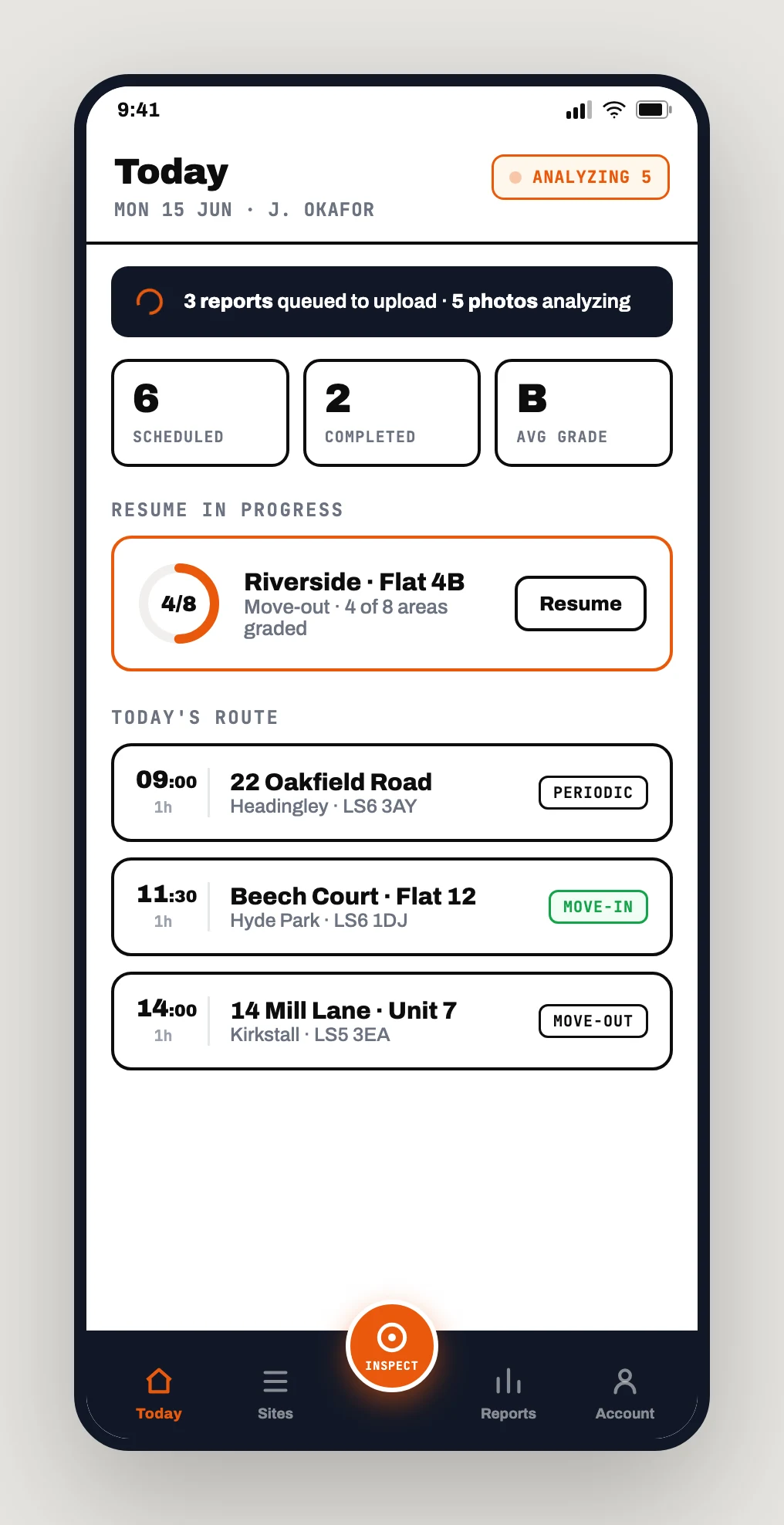
Today, Sites, Reports, and Account around a raised Inspect action — big targets, high contrast, reachable one-handed with gloves in direct sunlight.
K1 · Blueprint
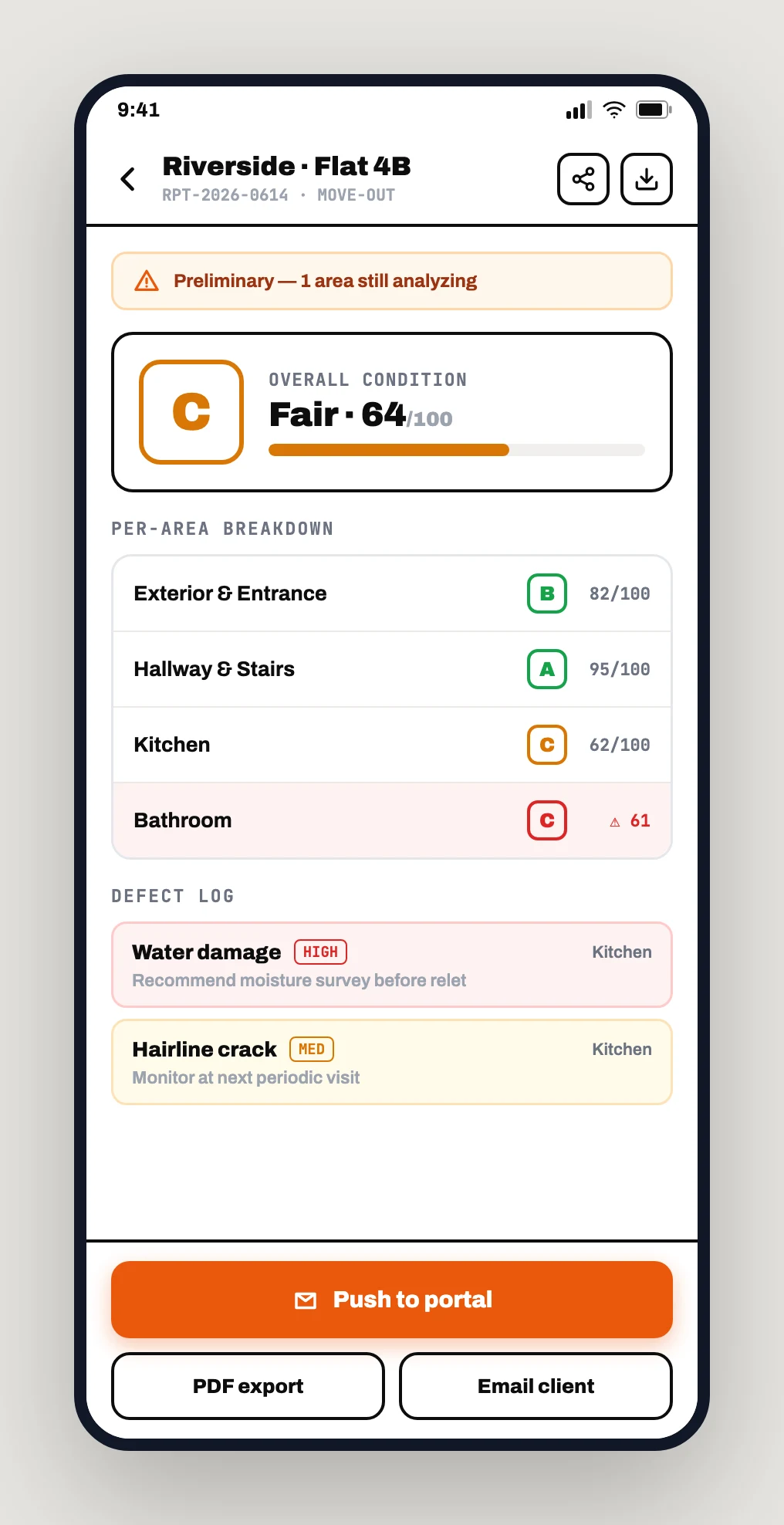
Capture the property once on site — AI grades the condition and the scored report is ready before you leave.
Inspectors lose the evening writing reports from a camera roll and their memory — and when a tenant disputes a deposit, there is no defensible grade to point at. The Field-Service Companion is a React Native starter built around the opposite workflow: walk the property area by area, capture against a checklist, and let a cloud vision model propose a condition grade with the photo evidence attached.
The flagship recipe is an AI site inspection app for property and facilities managers — move-in, move-out, periodic, and fire-safety templates. Construction snagging is the same shell with a pass/fail scoring model. Every screen, data model, and queue is wired the way we ship it for clients, and the repo boots on mock data with a stubbed analysis endpoint, so the full scored-report flow demos end to end before you connect a backend.
The solution
Solution details
The hard parts are already solved — the capture chain, the analysis queue, and the scored report are wired end to end, so you only build your domain on top.
Today, Sites, Reports, and Account around a raised Inspect action — big targets, high contrast, reachable one-handed with gloves in direct sunlight.
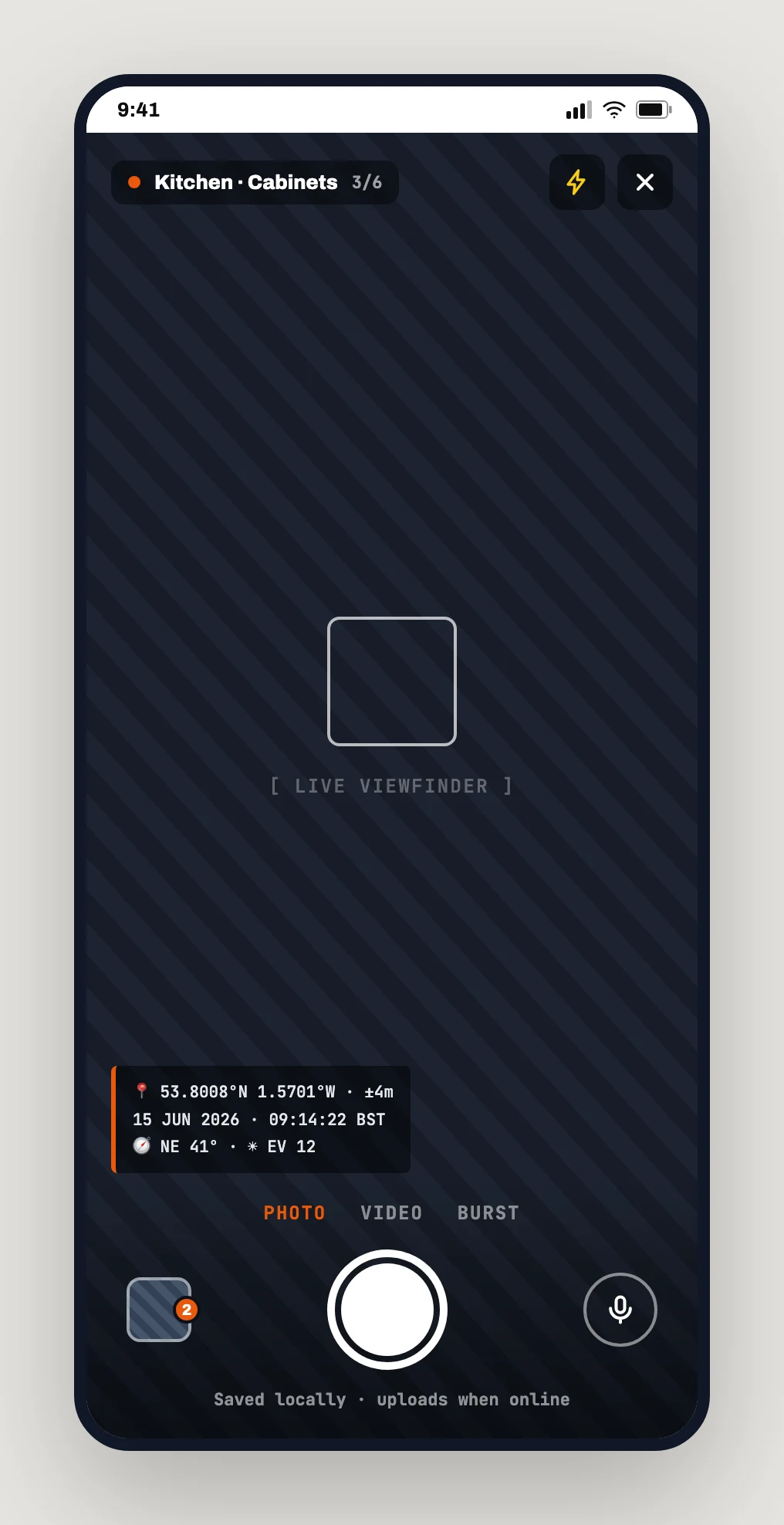
Photo, video, and burst capture with GPS coordinates, timestamp, and compass bearing stamped onto the image, plus voice notes for hands-free annotation.
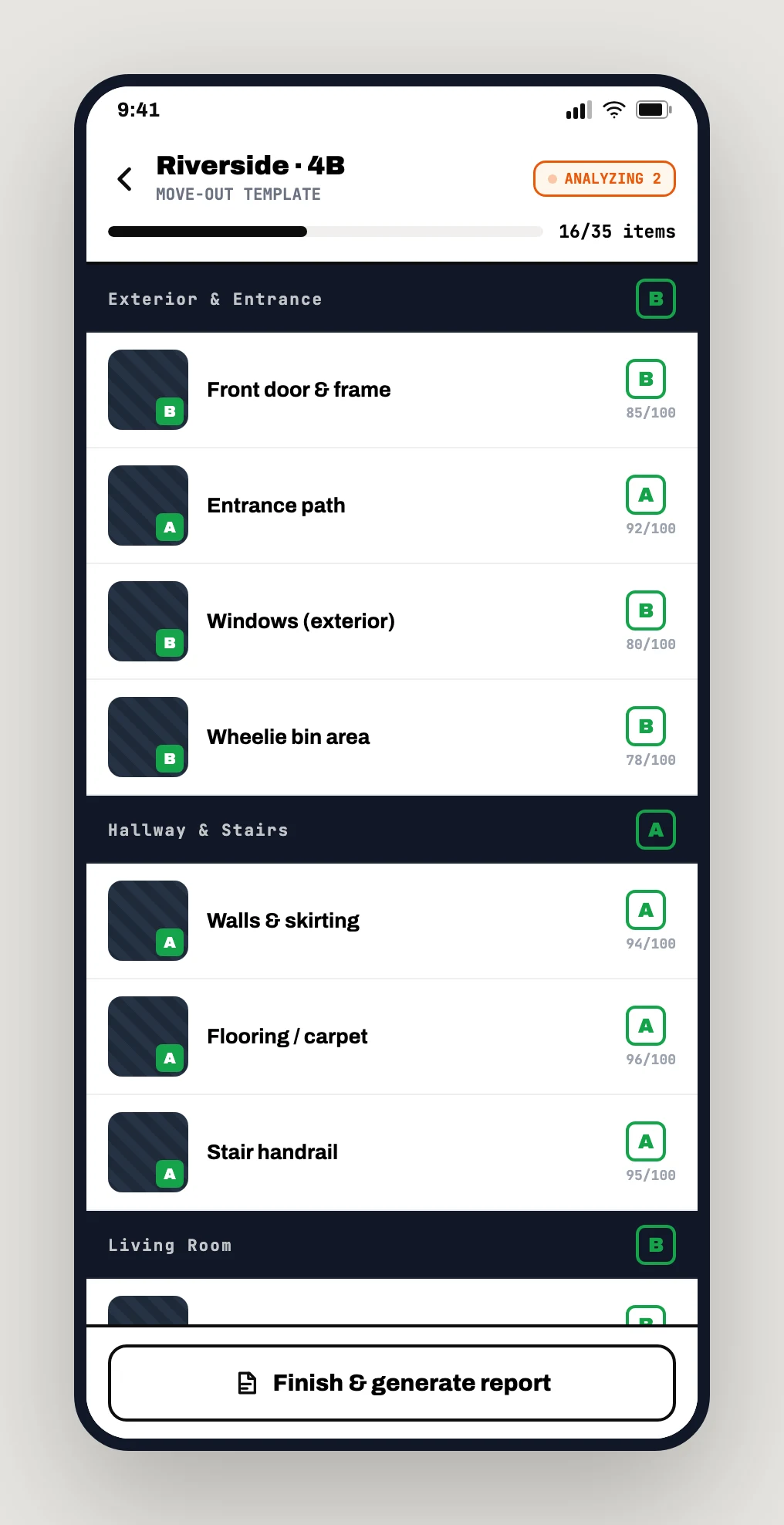
Move-in, move-out, periodic, and fire-safety templates define the areas and items. Each item carries its own state: empty, captured, analyzing, scored, or flagged.
Captures record locally and never wait on a signal. A retry-aware queue uploads on reconnect and reconciles the returned scores per item, so the walk is never blocked.
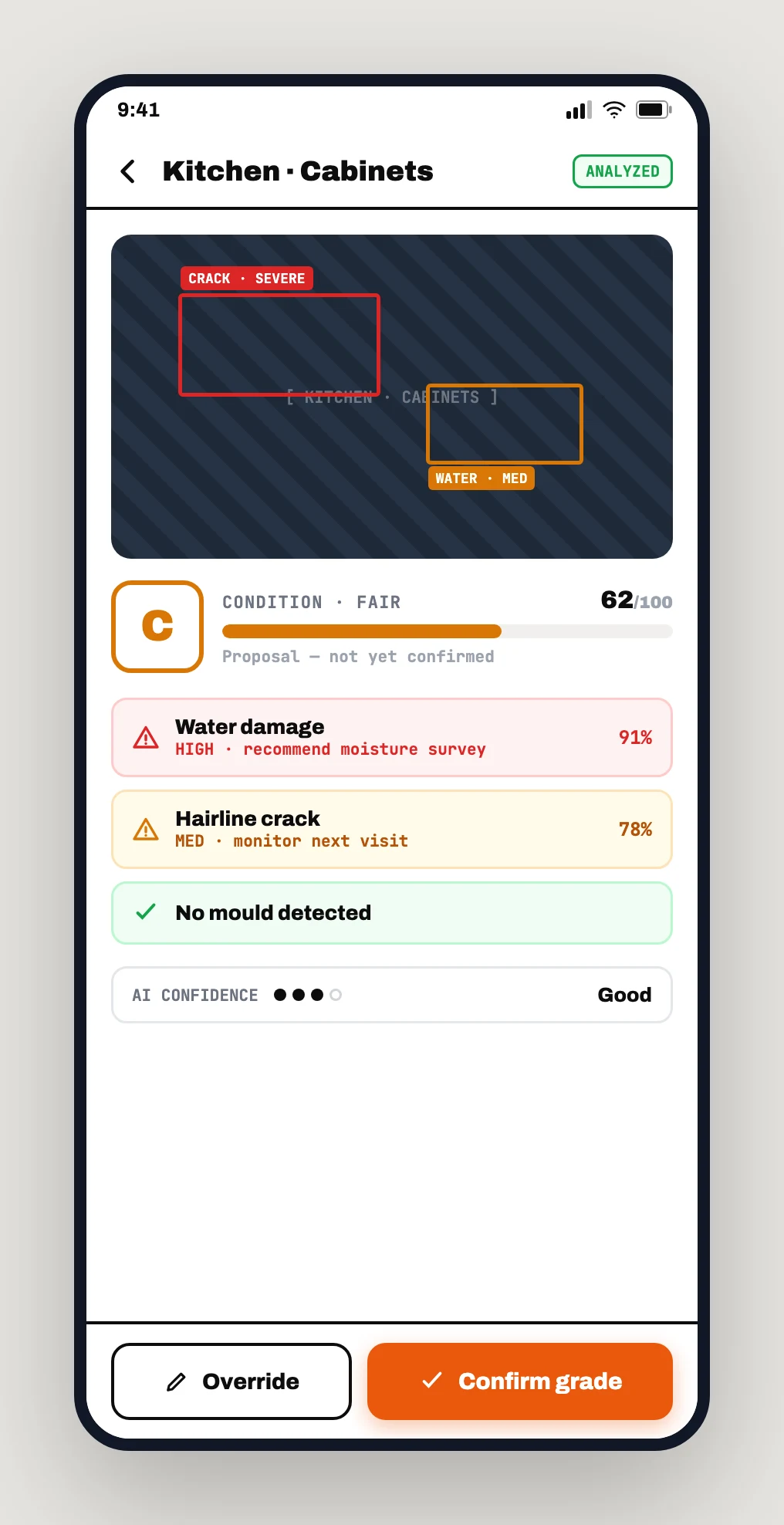
A vision endpoint returns a condition grade, bounding boxes over the defects it found, severity, recommended action, and a confidence score. Ships stubbed with canned results — swap the URL for the real model.
Nothing auto-finalizes. Every grade lands as a proposal with one-tap confirm or override plus a reason chip, so the human judgement is what reaches the legal report.
Downloads
Repo, designs, and docs in one place — the code, the Figma, the Claude design brief, and the PRD that scopes the flagship build.
Download the blueprint to prove the concept, then run a Trial Sprint — 1 week, 2 engineers, 50% cost — to take it to production.